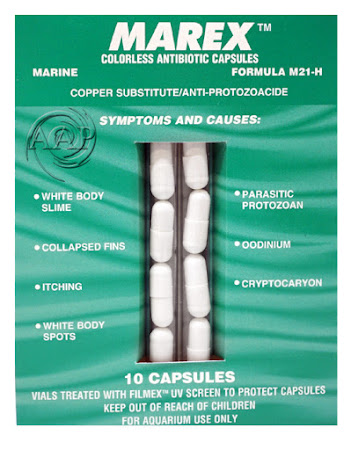
For our full, in depth four page internet page Aquarium/Pond Medications page, please click on the picture below:
AQUARIUM MEDICATIONS; Part 1
Including Separate pages for:
Antibiotics/Antimicrobials, Chemical & Parasite Treatments, & Organic Treatments
For the best in aquatic treatments: SEACHEM


-A great source for current aquarium information that is updated regularly as new research become available.
For UV Replacement Bulbs in your Ultra Violet Sterilizer, Clarifier, Purifier as well as Straight Tube UV Bulbs

Tetracycline; for Fish in Aquarium or Pond


Tetracycline Hydrochloride for Aquarium FishTetracycline Hydrochloride is derived obtained from Streptomyces aureofaciens (and other antibiotics of natural origin) or occasionally synthetically from oxytetracycline.

All antibiotics derived from streptomycetes are generally Gram-positive, although Tetracycline Hydrochloride and other antibiotics derived from streptomycetes can have some gram negative activity as well. Also, Tetracycline Hydrochloride is generally more effective for aerobic bacteria
Because it is primarily gram positive, it is generally a poor choice for Columnaris (Flexibacter) . Another related antibiotic is Minocyline which can be effective (but still not a first choice for Columnaris though) and it is often confused with Tetracycline Hydrochloride.

Tetracycline MoleculeWhen absorbed, Tetracycline is widely distributed to the organs and tissues of fish. It is eliminated unchanged primarily via the Kidneys and may accumulate with repeated dosing in fish with impaired renal function such as with many cases of Dropsy (which generally makes Tetracycline a poor choice for Dropsy).

Tetracycline Hydrochloride mode of action is as a protein synthesis inhibitor via an aminoacyl-tRNA binding mechanism to the 30S subunit. Mode of resistance is the loss of cell wall permeability. Tetracycline is best used in the treatment of bacterial infections that are gram-positive and SOME gram-negative infections in fish and interferes with the production of proteins that the bacteria need to multiply and divide (bacteriostatic). However many bacterial pathogens have developed resistance to Tetracycline Hydrochloride.

Common uses for Tetracycline Hydrochloride in fish include (generally gram positive causes of these symptoms);

*Streptococcus *Fin and tail rot (split, ragged and deteriorating fin and/or tail)
*Popeye (protruding eyes, may be cloudy or hazy)
*Gill disease (swollen, discolored gills, gasping for air and a decrease in activity)
*Some secondary infections after treatment of other infections or parasites.

Warnings:

I do not recommend the use of Tetracycline Hydrochloride for bleeding or ulcers in fish as Tetracycline has been shown to cause anemia in fish (and also humans to a lesser degree, which is the last thing you want to do with a bleeding fish.

Tetracycline can lower red blood cell count, because of this I would not use with injured fish. Tetracycline becomes dangerous past its expiration date. While most prescription drugs lose potency after their expiration dates, tetracycline can become toxic over time.

Side effects include: neutropenia (a condition of an abnormally low number of white blood cells), producing a “brown foam” on the surface of the aquarium especially for marine aquariums, and potential destruction of nitrifying bacteria.
s well, Tetracycline Hydrochloride is easily absorbed where calcium is present in larger quantities, which often renders this antibiotic useless in saltwater and high GH (hard water) freshwater aquariums.

The combined use of Tetracycline AND Erythromycin should be avoided (the side effects of these two antibiotics combined will generally negate any benefits obtained when used in combination).

Summary:

Tetracycline Hydrochloride can be a useful antibiotic, especially when others fail, however Tetracycline is more useful in warm blooded animals (humans and Veterinary) than in fish.

USAGE:

Directions from API Tetracycline; 250- 500 mg per 20 gallons of water. Every 48 hours (24 hours for severe issues) with a 25% water change before each treatment. This product will not work in water with a ph above 7.5- NOT FOR MARINE USE! (also not effective in freshwater aquariums with a pH above 7.6)

PRODUCTS CONTAINING TETRACYCLINE:

*API Tetracycline, for purchase
Recommended source to purchase based on extensive aquarium and pond professional experience dating back to 1978.

REFERENCES:

*Aquarium Medications 2; Antibiotics, Anti-microbials

*http://en.wikipedia.org/wiki/Streptomyces
*http://ratguide.com/meds/antimicrobial_agents/tetracycline_hydrochloride.php


Further Suggestions:
Prevention of disease is important, please maintain your water chemistry including KH, GH, pH, Ammonia, Nitrites, and even Redox, as all these parameters play a role in disease prevention. The use of a UV Sterilizer maintained by changing the UV Bulbs every six months can be helpful in prevention (including Redox).

For further information as per these suggestions, please read:
Aquarium Disease Prevention
UV Sterilization, Facts & Information

Labels: , , , , , ,

Metronidazole; by SeaChem, API, More


Metronidazole is an antibiotic (for anaerobic bacteria) and anti-protozoal medication used to treat various conditions internally and externally in fish.
Metronidazole belongs to a class of antibiotics known as nitroimidazoles which work by ceasing the growth of bacteria and protozoa.
Metronidazole is metabolized in the liver (whether a fish or a human).

Metronidazoles primary use is for the treatment of anaerobic gram positive & negative bacteria including those that produce beta-lactamase.
However, it is not effective against aerobic bacterium. This means Metronidazole is a poor choice for suspected bacterial diseases in open heavily oxygenated aquariums/ponds such as Columnaris, while it is an excellent choice for diseases of the intestinal tract (or other internal suspected bacterial pathogens) as well as bacterial disease in low oxygen, high bio-load aquariums or ponds.

As well Metronidazole is effective for some protozoa. It was originally found effective for the management of infection caused by Trichomonas vaginalis.
For fish applications Metronidazole has been shown to be especially internal and external flagellates.
Metronidazole is also sometimes effective for many protozoan parasite infections, especially for Cryptocaryon in marine aquaria as well as Hexamita & Ichthyophthirius.

Due to Metronidazoles effectiveness against anaerobic bacteria by selectively blocking some of the cell functions of anaerobic bacteria, Metronidazole along with Neomycin is a good choice for bloating of the digestive tract (common in goldfish).
Metronidazole selectively blocks some of the cell functions in anaerobic bacteria, resulting in their demise.

Metronidazole is also effective used in combination or by itself for internal parasites such as Nematodes or Trematodes. In marine aquarium infections is where Metronidazole really shines as it is very effective internally and since Marine fish are always drinking the water around them, medication is easily transported to the infected area. In Freshwater, treatment can be improved by soaking food as well and this is still an effective freshwater treatment as well.

USAGE:

Directions from SeaChem Metronidazole; use 100 mg. for every 10 gallons (40 L).
Repeat every 2 days until symptoms disappear.
Make sure any UV Sterilizer (if used) is turned off and any carbon, Purigen, Chemipure or similar chemical filter media is also removed during treatment.

To feed (use as for a medicated food), use 100 mg. with approximately i tablespoon of frozen or dried food (fried food would need to be placed in just a enough water to cover and make wet/moist). Feed until symptoms disappear.
Introduction of Metronidazole to the aquarium water when feeding is OK.
Metronidazole can also be used in a fish bath. This is generally performed at double the "in tank" dose as per amount of water used in this bath. I recommend the use of Methylene Blue and maybe salt during this bath treatment too (once or twice per day for 7-10 days).
See: Fish Baths, Dips, Swabs

PRODUCTS CONTAINING METRONIDAZOLE:

*SeaChem Metronidazole, for Purchase
Recommended source to purchase based on extensive aquarium and pond professional experience dating back to 1978.
SeaChem's Metronidazole is the MOST PURE and easily used form of this antibiotic available to the fish keeping community


*Tetra Parasite Guard, for Purchase Contains Praziquantel, Metronidazole, Acriflavin, Diflubenzuron

*API General Cure, for Purchase Contains Metronidazole & Praziquantel

References:

Aquarium Medications 2; Antibiotics, Antimicrobials

Labels: , , , , , , , , , , ,

SeaChem Purigen


SaChem Purigen, Aquarium Filter MediaWhat is SeaChem Purigen?

First, I will say what Purgien is not; Purigen is NOT a treatment or water conditioner, rather Purigen is a chemical Filtration Product or "Filter Media".
Purigen is a premium synthetic adsorbent that is unlike most other similar filtration products such as Bio-Chem Zorb or Boyds Chemi-Pure.
Purigen is not a mixture of carbons, ion exchangers or adsorbents, rather Purigen is a unique macro-porous synthetic polymer that removes soluble and insoluble impurities from water at a rate and capacity that exceeds all others by over 500%. Sea Chem Purigen controls ammonia, nitrites and often hard to control nitrates by removing nitrogenous organic waste that would otherwise release these harmful compounds, with minimal impact on trace elements.

Purigen possesses enhanced capacity owing to its vast surface area. All other resins on the market are purely spherical extruded beads. These beads remain smooth even under a microscope. Purigen is both spherical and macroreticular. A macroreticular resin is made of two continuous phases, a continuous pore phase and a continuous gel polymeric phase. The polymeric phase is structurally composed of small spherical microgel particles agglomerated together to form clusters, which, in turn, are fastened together at the interfaces and form interconnecting pores. The surface area arises from the exposed surface of the microgel glued together into clusters.
The result is microscopic pores that increase its usable surface area to many times that of a purely spherical resin.

The result is that Purigen is the highest capacity organic filtration resin on the market. No other products can compare to its ability to clear and polish yellow or cloudy water to unparalleled clarity. Unlike other products on the market which are simple ion-exchange resins, Purigen is specifically designed to be an organic scavenging resin. When ion-exchange resins are filled to capacity by metals and other contaminants, Purigen® has barely begun to reach its potential.

ATTRIBUTES OF PURIGEN

*SeaChem Purigen polishes water to unparalleled clarity and darkens progressively as it is exhausted

*Purigen removes many tannins and other organic water "yellowing" by-products that ordinary carbon or carbon based products cannot (this is especially helpful to use with new driftwood or to lower the "yellow" color of aquarium 2-3 days after introduction of Indian Almond Leaves or Peat).
Purigen has no known effect on bacteria. It takes all the dye of e.g. peat, etc. allowing for more light available for plants.

*Purigen can be combined with Matrix or NPX Bioplastics Nitrate & Phosphate Reducing Polymer for even better results.
However in planted freshwater aquariums, we primarily recommend SeaChem Matrix (as well NPX Bioplastics Nitrate & Phosphate Reducing Polymer is generally intended for Marine aquariums with a Protein Skimmer, although use with Purigen including a planted freshwater aquarium would be an exception).

SeaChem Purigen Regenerate with Bleach*Sea Chem Purigen is easily renewed by treating with bleach and is designed for both marine and freshwater use.
Directions; Soak in a 1:1 bleach:water solution for 24 hours in a non-metalic container in a well ventilated area and away from children. Rinse well, then soak for 8 hours with a solution containing 2 tablespoons of Prime, or equivalent dechlorinator (Water Conditioner) per cup of water (do not use slime coat dechlorinators such as Stress Coat or Novaqua).
Then, rinse well. After this, original color and full activity should now be restored and Purigen is ready for reuse.

The picture to the above/left show Purigen after a soak in bleach

References:
*http://www.amberlyst.com/faq_general.htm
*http://www.seachem.com/Products/product_pages/Purigen.html
*http://www.aquaforum.nl/cgi-bin/ultimatebb.cgi?ubb=print_topic;f=6;t=000765
*SeaChem Purigen, for Purchase (Recommended source to purchase based on extensive aquarium and pond professional experience dating back to 1978)

OTHER SUGGESTED READING:

*UV Sterilization for Aquarium or Pond
This is the most in depth article on the subject of the important use of UV Sterilizers for aquarium or pond disease prevention and redox balance.

Labels: , , , , , , , ,

Erythromycin for Aquarium Fish


Erythromycin is a primarily gram positive antibiotic with a slightly "wider" antimicrobial spectrum to otherwise similar to penicillin.

A popular albeit often incorrectly and over recommended for fish infections. In humans Erythromycin is often used respiratory tract infections, which of coarse does not exist in fish (gills versus lungs).

During treatment Erythromycin is rapidly absorbed in a microbiologically active form into most tissues and phagocytes found in vertebrates (such as fish). Due to the often resulting high concentration of Erythromycin in phagocytes (white blood cells), Erythromycin is actively transported to the area of infection.
Over use of Erythromycin may result in muscle (including heart) and kidney damage, providing electrolytes, in particular calcium while treating with Erythromycin can aid in prevention or reversal of this damage

USE:

The primary disease pathogens for use of Erythromycin are Staphylococcus and Streptococcus (which often includes many eye and mouth infections of fish).
Occasionally these bacterial pathogens can result in fin and tail rot as well.

Erythromycin can generally be combined safely with Triple Sulfa for a more wider spectrum treatment (especially for use against Staphylococcus infections). Although often recommended for Columnaris and Fish Fungus, these are simply INCORRECT uses for Erythromycin.

DIAGNOSTIC CHART
Please realize diagnostic charts are generalizations with many inaccuracies such as use for "true" mouth fungus.
Please click on the picture to enlarge for better view


FINALLY: While I strongly recommend the use of a UV Sterilizer both before and after treatment (24/7), use of this device should be discontinued during treatment with Erythromycin.

Aquarium Pharmaceuticals Erythromycin Diagnostic Chart

"API Erythromycin" can be purchased here (A business with professional aquarium medication experience dating back to 1978):
API Erythromycin

Sources:
*Aquarium Medications; How They Work
*Aquarium Medications; Antibiotics, Erythromycin *http://en.wikipedia.org/wiki/Erythromycin
*http://www.drugs.com/pro/erythrocin.html

For Replacement UVC Bulbs to keep your UV Sterilizer (such as a TMC Vecton or Advantage UV) in peak performance, please visit this resource:
UV Bulbs

Labels: , , , , , , , , , ,

Nitrofurazone, Furan 2; For Aquarium, Pond


This article is copied in part courtesy:
Aquarium Medications 2, Antibiotics/ Anti-microbials


Nitrofurazone also known as Nitrofural, is a broad-spectrum bactericidal drug, with some anti-protozoal activity. Nitrofurazone can be used both therapeutically (treatment) and prophylactically (prevention).

Nitrofurazone inhibits several bacterial enzymes, especially those involved in the aerobic and anaerobic degradation of glucose and pyruvate.
This antibacterial is effective for control of Flexibacter/Columnaris (Symptoms: Fuzzy, thin, white coating on the body and fins. Looks like a fungus) it works well with Kanamycin for difficult incidences of this pathogen, Aeromonas (Symptoms: fish have blisters forming on the skin that are full of a clear to yellowish fluid. The blisters may turn into large sores.), Vibrio and related bacterial species.

Nitrofurazone (Nitrofural) is particularly useful for control of minor topical skin infections of freshwater & marine fish that have not become systemic. As well, Nitrofurazone is effective for surface skin infections of Streptococcus iniae which may appear as a milky peeling slime.
Effective as well against marine external ulcer disease and some protozoan infestations. For this reason, Nitrofurazone is a good next step treatment for wounds and other topical infections when first step treatments such as Pimafix or Melafix fail.
Nitrofurazone is also useful in treating Furunculosis found in Koi (best treated in a small "kid pool" or bathtub with a seasoned Sponge Filter).

Serious adverse reactions related to general nitrofurans are very rare in aquarium or pond fish. Acquired resistance of bacteria to nitrofurans during therapy has been rare and has not appeared on a significant scale in over 50 years of use.
Do not use in the presence of invertebrates.

TIPS

*Nitrofurazone is more effective at lower pH levels. Nitrofurazone is not Skin absorbed , so use of this Bactericidal for systemic infections is not recommended. However Aquatronics and myself have found that Nitrofurazone combines well with Kanamycin (which is skin absorbing), and is very complimentary to each other as wells since Nitrofurazone is often better topically for Aeromonas while Kanamycin is generally more effective for Columnaris, and since these bacterial infections are often hard to differentiate by the average aquarist, this can be a good combination when unsure.

*Nitrofurazone can be combined with Kanaplex to make an even more wide spectrum treatment, especially for difficult cases of Columnaris or Aeromonas.
This duplicates the popular Aquatronics product “Spectrogram” that is no longer available.

*Nitrofurazone can be combined with Kanaplex & Metronidazole for parasitic, fungal, & bacterial infections; this duplicates the popular Aquatronics product “Paragon 2” that is no longer available.

DIAGNOSTIC CHART
Please realize diagnostic charts are generalizations.
Please click on the picture to enlarge for better view


Aquarium Pharmaceuticals Furan 2 Diagnostic Chart

"API Furan Two" (Nitrofurazone + Furazolidone) can be purchased here (A business with professional aquarium medication experience dating back to 1978):
Furan 2

Labels: , , , , , , , , , , ,

Triple Sulfa; For Aquarium, Pond

Aquarium, Pond Triple Sulfa

This article is copied in part courtesy "Aquarium Medications 2, Antibiotics/ Anti-microbials


Updated 5/15/12

Sulfas drugs are among the oldest in the medicine and are considered anti-microbials.
Sulfas are bacteriostatic, meaning they inhibit the growth of the bacteria but do not kill them. Sulfas are generally most effective against aerobic gram-negative organisms but are not reliable against aerobic gram-positive bacterium.

Sulfa drugs arrest cell growth by inhibiting the synthesis of folic acid, a component required for growth by bacteria. Folic acid is a large molecule and is unable to enter bacterial cells, so the bacteria must synthesize the compound intracellularly. Animal cells are unable to synthesize folic acid and it must be provided in the diet. For this reason sulfa drugs are not toxic to animal cells.

Sulfa drugs are among the oldest in the medicine, the first being a sulfonamide was trade named Prontosil dating back to experiments by Bayer in 1932.
For aquatic use Sulfa are often maligned by many aquarists as not effective or out of date, yet in reality Triple Sulfa often will work where other antibiotics fail and sometimes with less side effects as well (this is not to say Sulfas do not have side effects as they are somewhat toxic, producing blood abnormalities and kidney damage when indiscriminately used). Sulfas also do not tend to be as sensitive to poor use (meaning not following the full treatment regimen).
TIPS

*As a broad spectrum primarily gram negative antibacterial medication; Triple Sulfa can be used for fin and tail rot, mouth fungus and collapsed fins, Columnaris, and hemorrhagic septicemia.

*Triple Sulfa is also useful for fin rot or damaged fins caused by fin nipping.

*Since Sulfas are more effective at higher pH levels, this can be a good choice for livebearer or goldfish fin rot (as well as any other fish generally kept at a higher pH)

*Sulfas can also be safely used with other mild broad spectrum parasite/fungal treatments to boost anti bacterial effectiveness,; a good example would be the Medicated Wonder Shell.

* Sometimes effective when other often first choice gram negative treatments (such as Kanamycin) fail.

*An old standby that is still useful and can be used in combination with Malachite Green (especially effective in combination with MG at ½ strength when treating Ich in scale less fish) or Acriflavin (do not combine with copper sulfate). Sulfas are more effective at higher pH levels. As an example, using Triple Sulfa with ParaGuard) will render it safer for sensitive fish such as a Clown Loach.

IMPORTANT NOTE: While I strongly recommend the use of a UV Sterilizer both before and after treatment (24/7), use of UV-C Sterilization should be discontinued during treatment with Erythromycin.

Diagnostic Chart
Please realize diagnostic charts are generalizations

Aquarium Pharmaceuticals Triple Sulfa Diagnostic Chart

Triple sulfa can be purchased here (A business with professional aquarium medication experience dating back to 1978):
Triple Sulfa

Labels: , , , , , , , ,

Aquarium medications, treatments, and how they work.

This site which is simply a basic first draft of my FULL "AQUARIUM MEDICATIONS, treatments, how they work" article. Please refer to that article for more information that is more current and regularly updated.

When you have fish that are sick (bacterial, fungal, protozoan, or other parasites), you want to try and isolate them in a hospital aquarium whenever possible. Regular water changes before each treatment allow for a more effective treatment, especially when treated in the display aquarium.
Sponge Filters work well in hospital aquariums. Remember to remove carbon, as carbon will remove many medications. Also note that silicone in the aquarium will absorb malachite green , methylene blue, and copper sulfate. Most corals (crushed and otherwise), and ceramic decorations will also absorb medications such as malachite green, methylene blue, and copper sulfate.

Proper "positive charged" calcium levels are important (as well as other electrolytes), as calcium also helps in healing and stress, and without proper calcium levels healing may be difficult or impossible. The addition of antibiotics (such as Tetracycline) will lower calcium absorption.
For more information about calcium, see this article: CALCIUM, MAGNESIUM, AND KH IN AQUARIUMS
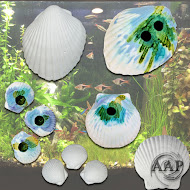
"Medicated Wonder Shells" deliver medication for ich and fungus treatment and control kH (Calcium) levels.

One more note as to the use of medications to treat aquatic diseases; Make sure all your water parameters are where they should be, if for example your ammonia levels are high, all the medication in the world will not help, in fact they will only exasperate the problem.

Before ANY treatment, check these parameters and ask yourself these questions:

*Ammonia; this should be 0, if not this should be corrected by water changes, ammonia de-toxifiers such as Prime (removes chlorine, chloramines, ammonia, nitrite) , improving bio filtration (the best long term solution).

*Nitrites; this also should be 0

*Nitrates; this should be under 40-50 ppm for most fish, under 15 ppm for reef tanks

*kH, Calcium, and electrolytes; for many fish this should be 80 ppm, for goldfish higher, for African Cichlids, Marine much higher (240 ppm +).
For more see this article: How to maintain a Proper KH, why calcium and electrolytes are important.
Also see these articles:
Do Fish Drink
Salt in Freshwater Aquarium

*pH; often aquarists worry too much here (a steady KH maintains a stable pH), but if you have fish such as African Cichlids that like a pH above 8.0 (or more depending on species) and your pH is 6.8, you have a problem.

*Temperature; is your aquarium the proper temperature?

*Filtration; do you have adequate filtration for your size aquarium and bio load? Is it working?

PLEASE NOTE, this is a basic Medications article.
If you need expanded information about any of these medications or ones that are not even in this article, please see my expanded article:
AQUARIUM MEDICATIONS, Treatments, How they work, and Which Ones to Use and Not to Use


TRIPLE SULFA (Sulfamerazine, Sulfamethazine, Sulfathiazole):

Sulfas are all antibacterials. These drugs produce are bacteriostatic, meaning they inhibit the growth of the bacteria but do not kill them.
Sulfa drugs arrest cell growth by inhibiting the synthesis of folic acid, a component required for growth by bacteria. Folic acid is a large molecule and is unable to enter bacterial cells, so the bacteria must synthesize the compound intracellularly. Animal cells are unable to synthesize folic acid and it must be provided in the diet. For this reason sulfa drugs are not toxic to animal cells.

USE: A broad spectrum antibacterial medication, fin and tail rot, mouth fungus and collapsed fins, columnaris, and hemorrhagic septicemia. Also useful for damaged fins caused by fin nipping. An old standby that is still useful and can be used in combination with Malachite Green or Acriflavin (do not combine with copper sulfate). Sulfas are more effective at higher pH levels.
DOSAGE: 250 mg per 10 gallons every 24 hours with a 25% water change before each treatment. Treat for a minimum of 10 days.


TETRACYCLINE HYDROCHLORIDE:

USE: Treatment of bacterial infections mostly gram-positive and some gram-negative infections such as fin and tail rot (split, ragged and deteriorating fin and/or tail), Popeye (protruding eyes, may be cloudy or hazy), gill disease (swollen, discolored gills, gasping for air and a decrease in activity) and secondary infections. It interferes with the production of proteins that the bacteria need to multiply and divide (bacteriostatic). Tetracycline Hydrochloride mode of action is as a protein synthesis inhibitor via an aminoacyl-tRNA binding mechanism to the 30S subunit. Mode of resistance is the loss of cell wall permeability. Note, Tetracycline can lower red blood cell count, because of this I would not use with injured fish.

DOSAGE: 250- 500 mg per 20 gallons of water. Every 24 hours with a 25% water change before each treatment. This product will not work in water with a ph above 7.5- NOT FOR MARINE USE!


QUININE SUFATE:

USE: Resistant strains of Ich (especially on scale less fish). Protozoan, sliminess of the skin and Rams disease (whirling disease). Also good for resistant strains of Hexamita when combined with Metronidazole.
DOSAGE : 250 mg per 10 gallons of water. Once a day for 4-5 days. Do a 25% water change before each treatment.


OXYTETRACYCLINE HYDROCHLORIDE:

USE: Gram-positive and gram-negative bacteria. Marine ulcer disease, cold water disease, bacterial hemorrhagic septicemia (Symptoms: Red streaks in body and fins, or redness in the body. Open sores or loss of scales) and mouth fungus.

DOSAGE: 250- 500 mg teaspoon per 20 gallons every 24 hours with a 50% water change before each treatment. This antibiotic is best used mixed in with food, especially if your ph is above 8.0..


NITROFURAZONE:

USE: Bactericidal for some gram-positive and many gram-negative bacteria causing disease in fresh water and marine fishes. This antibacterial is effective for control of flexibacter/columnaris- (Symptoms: Fuzzy, thin, white coating on the body and fins. Looks like a fungus) -works well with Kanamycin for this, Aeromonas (Symptoms: fish have blisters forming on the skin that are full of a clear to yellowish fluid. The blisters may turn into large sores.), Vibrio and related species. Nitrofurazone is particularly useful for control of minor topical skin infections of marine fishes that have not become systemic. Effective against marine ulcer disease and protozoan. Also useful in treating furunculosis found in Koi.
Serious adverse events related to nitrofurans are very rare. Acquired resistance of bacteria to nitrofurans during therapy has been rare and has not appeared on a significant scale in over 50 years of use. Do not use in the presence of invertebrates.
Nitrofurazone is more effective at lower pH levels.

DOSAGE: 250- 500 mg per 20 gallons. Treat every 24 hours with a 50% water change before each treatment. Treat for 10 days.

FOR MORE INFORMATION ABOUT COLUMNARIS (FLEXIBACTER)


NEOMYCIN SULFATE:

USE: Some Gram-negative bacteria (Some Pseudomonas- Open red sores or ulcerations, fin and tail damage, fins and tail are eaten away, in severe cases, down to the body- treat with Kanamycin for this); gram-positive, and possibly mycobacterium tuberculosis. Works well in freshwater or saltwater aquariums.

Neomycin is not absorbed by the intestinal tract and IS effective in treatment of diseases thereof. But Neomycin can damage the kidneys as it is nephrotoxic, so this is a poor treatment choice for Dropsy or similar diseases.

DOSAGE: 250 mg per 10 gallons of water. Treat every 24 hours with a 25% water change before each treatment. Treat for 10 days. For tuberculosis, use for up to 30 days.

Neomycin is an excellent choice when soaked in foods for 15 minutes for intestinal diseases such as internal Aeromonas infections. HOWEVER Neomycin is a poor choice for Columnaris and Fungal Infections, despite some misinformed anecdotal internet information to the contrary.
See: Aquarium Medications; Neomycin


METRONIDAZOLE:

USE: Hole in the head disease (hexamita), chilodonella, plistophora (parasite disease usually seen in neons and cardinals that causes loss of color, darting, and eventually death), salt water ich (Cryptocaryon), bloat.

DOSAGE: 250-500 mg per 20 gallons. Treat every 24 hours with a 25% water change before each treatment. Treat for 10 days.


KANAMYCIN SULFATE;

USE: It is used to treat many sensitive gram–negative and some gram–positive bacteria. Works especially well in salt water aquariums. Works well combined with Nitrofurazone for flexibacter (columnaris) (Symptoms: Fuzzy, thin, white coating on the body and fins. Looks like a fungus). Also useful for Pseudomonas-Open red sores or ulcerations, fin and tail damage, fins and tail are eaten away, in severe cases, down to the body. Kanamycin is very effective in high pH applications, especially Vibrio, making it useful for brackish and marine treatments.
Kanamycin can be effective for whirling disease , suspected kidney disease and dropsy.
Kanamycin sulfate appears to prevent bacteria from making their cell walls, so the cells die.
DOSAGE: 250-500 mg per 20 gallons. Treat every 48 hours with a 25% water change before each treatment. Treat for 10 days.

FOR MORE INFORMATION ABOUT IDENTIFICATION AND TREATMENT OF AEROMONAS, VIBRIO, & SEPTICEMIA


ERYTHROMYCIN:

USE: Fin and tail rot, infections attributed to kidney disease (often not true kidney infections), pop eye. Most gram-positive and some gram negative bacteria and fungus. Neon Tetra disease (faded color). Black Molly disease.
DOSAGE: 250- 500 mg per 20 gallons every 24 hours with a 25% water change before each treatment. Treat for 10 days.

TRICHLORFON (Dylox)
Dimethyl (2,2,2,Trichloro-1-Hydroxyethyl) Phosphonate:

Trichlorfon is an Organophosphate and degrades rapidly (approximately 99% of applied degraded in 2 hours) in alkaline pond water (pH 8.5) at room temperature. But remains stable in the same pond water held under acidic (pH 5.0) conditions for 2 hours.
Trichlorfon is very highly toxic to invertebrates.
DO NOT USE ON FISH THAT ARE CHEMICALLY SENSITIVE such as: Silver Dollars, Rays, Bala Sharks, Arowanas, Tinfoil Barbs, Hemiodus, Piranha, Most Silver Scaled Fish, Marine sharks, Lion Fish.
See methylene blue if Dylox treatment is not available or viable

USE: Trichlorfon is useful for treatment of: Hydra, Lernia (Anchor Worms), Parasitic Copepods, Monodigenetic and Digenetic Flukes, Fish Lice (Argulus), Leeches
CLOUT contains Trichlorfon (Dimethyl (2,2,2,Trichloro-1-Hydroxyethyl) Phosphonate), as well as; 4-[P-(dimethylamino)-O-phenylbenzylidene]-2, 5-cyclohexadien-1-xylidene dimethylammonium chloride, 1,2,dimethyl-5-nitroimidazole
DOSAGE: There is no recommended dosage (other than Freshwater fish acute toxicity= 1.6-180 ppm), refer to manufacturers directions for all products containing Trichlorfon.


PENICLLIN, AMPICILLAN;

USE: Belonging to the group of beta-lactam antibiotics, ampicillin is able to penetrate Gram-positive and some Gram-negative bacteria.
Even though this a commonly used antibiotic family in humans and other warm blooded animals, this is a family of antibiotics that has shown to be generally useless in fish. About the only effectiveness comes in the treatment of some fungal eye infections. All medications, antimicrobials, antibiotics, chemotherapeutics work differently in differently in different organisms, even if the processes are similar. An example I often use is for Quinine Sulfate; this is a generally safe and effective treatment for fish, but not at all for invertebrates.


ISONIAZID 300 mg:

USE: Treatment for tuberculosis (Symptoms: the fish have been sick for several months. The fish is lethargic, anorexic, has fin or scale loss and a sunken stomach) in susceptible fish such as Discus. Can be combined with Kanamycin.
This is a difficult disease to treat (in fact nearly impossible), as treatment can go on for more than a month.
Also note that this is caused by a very similar bacterium in human TB, but is not the same, and the only danger to humans is to a open wound exposed to the bacterium, which then only causes a localized rash.

DOSAGE: 1 tablet per 20 gallons, every other day for 14- 30 days


METHYLENE BLUE (Zinc Free) 2.303% :

USE: Fungus on eggs, Ich, fungus and some bacteria. Effective in gill disease. Transports oxygen. Some protozoa, sliminess of the skin and oodinium. Great for use as a 30 minute dip at double dose.
Great when used as a dip for topical treatment of parasites, bacterial, and fungal infections. When dylox is not available, this can a useful treatment for anchor worm (especially in goldfish); first carefully remove the anchor worm with tweezers, then dip the affected fish in Methylene blue. When used with a UV sterilizer to kill the swimming stage of the female anchor worm (the female is the parasite), this can be an effective treatment. (Tank can also be treated with Malachite green or malachite green combination during this time for improved effectiveness).
Also useful as a dip for ammonia and nitrite poisoning.

DOSAGE: 1 teaspoon of a 2.303% solution per 10 gallons every other day for 10 days with water changes before each treatment. BEST USED IN A HOSPITAL TANK. Methylene blue can destroy nitrifying bacteria and plants in the display aquarium.


ACRIFLAVIN HYDROCHLORIDE 3.84% solution:
USE: An antiseptic agent for the skin and mucous membranes. It is known to inhibit mitochondriogenesis. Generally used treatment of mild bacterial and fungal infections such as mouth fungus, fin and tail rot, fungus, saproglenia; skin parasites such as oodinium (velvet), sliminess of skin, and ich (although a very mild treatment for ich, FW or SW)
DOSAGE: 1 teaspoon of a 3.84% solution per 10 gallons every other day for 10 days. Combines well with copper sulfate and malachite green.


MALACHITE GREEN;

USE: For treatment and control of various external parasites of freshwater and marine fishes. When used as directed the medication will control or prevent the following common protozoan parasites:
*Ichthyophthinus (freshwater Ich) exhibited as fine “salt like” white spots that usually first appear on the fins.
*Costia (Ichthyobodo). Not to be confused with ich, is a parasite that can live dormant on healthy fish (primarily their gills), then under certain conditions (poor water conditions, stress, ECT), reproduce rapidly. Symptoms of an outbreak include Heavy and labored “breathing” flashing and rubbing, skin cloudiness caused by excess mucus.
*Chilodonella, *Ambiphyra, *Cryptocaryon (marine Ich), *Epistylis, *Oodinium and Trichodina, *Plistophora (best combined with formalin at 1/2 strength)
Malachite Green is also effective against common external fungal infections of fishes and eggs which include Achlya and Saprolegnia.
DOSAGE: 1 teaspoon of a 0.038% solution per 10 gallons every other day for 10-14 days. Or 1 drop of .50% solution per gallon every other day for 10- 14 days. 25% water changes are recommended before each dose. Use half dose for scale-less and delicate fish such as Clown Loaches and Neon Tetras. Double dose for marine aquariums.
Note; malachite green is more toxic at higher ph.
Can be combined with Formalin or Acriflavin.

Two excellent products with malachite green are:
ParaGuard and Quick Cure

FOR MORE INFORMATION ABOUT AQUARIUM ICH


FORMALIN (3% formaldehyde):

USE: For treatment and control of the diseases caused by fungi, protozoan and monogenetic trematodes of freshwater and marine aquarium fishes. Formalin will control or help prevent diseases of fishes caused by the following disease organisms: *Ichthyophthirius (freshwater "ich"), *Costia (Ichthyobodo), *Chilodonella, *Ambiphyra, *Cryptocaryon (marine "ich"), *Epistylis, *Oodinium, *Amyloodinium, and *Trichodina.

DOSAGE: 1 teaspoon of a 3% solution per 10 gallons every other day for 10 days. Combines well with malachite green.
Formalin can deplete oxygen in an aquarium, so consider adding an air stone or a power head with an air diffuser.

An a excellent product with formalin and malachite green is


COPPER SULFATE (& Other Copper Products):

USE: For treatment freshwater and marine ich, Oodinium, external parasites, fungus and even algae. Very effective when used properly and carefully.

DOSAGE: Treat according to your solution to bring your copper level to .15 -.25 ppm.

Sequestered Copper (often called chelated, but that is incorrect, chelated means inactivated) sulfate works best (citric acid help achieve this). Soluble copper salts work well in freshwater only. Do use with snails and other invertebrates, do not use in reef aquariums, and note; when uses as an algaecide, the copper is absorbed by the algae then released when it dies. Removal of sequestered copper can be difficult, only EDTA (Ethylene Diamine Tetra Acidic Acid) and water changes remove it, NOT carbon.
The advantage of this stabilized form of copper is generally only one treatment is necessary.
Mardel Copper Safe is a good example of this type of copper treatment

Ionic Copper as in SeaChem Cupramine is the safest copper formula and the easiest to extract from an aquarium once treatment is finished

For an effective treatment for ich, fungus, and especially Velvet, Medicated Wonder Shells are extremely for Velvet in particular as they have three of the most effective ingredients for the treatment of Velvet; Copper Sulfate, Acriflavin, & Methylene Blue. They also add electrolytes and calcium, essential for proper healing.


ORGANIC MEDICATIONS:
There are three organic or “homeopathic” treatments that I have used;

PIMENTA EXTRACT (PIMAFIX);

USE: Pimenta extract is effective for a broad range of bacterial and fungal diseases that typically afflict fish and other aquatic animals. Fish diseases that may be treated in accordance with this include bacterial fish diseases, such as fin and tail rot, mouth fungus (often caused by the bacterium Flavobacterium columnaris); fungal fish diseases (such as those caused by microorganisms of the genera Saprolegnia and Achyle) and the like.
Pimenta Extract has shown to be more effective against gram negative bacterial infections which are more common in aquatic infections. This generally makes Pimafix a better choice over Melafix, although they can be combined.

DOSAGE: Refer to Pimafix instructions

USNEA LICHEN;

USE; Usnea is a lichen of the family Parmeliaceae that grows in damp temperate woodlands.
I have found it effective for bacterial (gram positive and gram negative), fungal and even parasites such ich. This remedy is still in the testing phase, but early results are promising. The Usnea Lichen is proving to be the most effective natural remedy early in my testing
This lichen is boiled like a tea then added to the aquarium.

DOSAGE: None established yet. I boil one small sprig in 6 oz. of water and add this to every 10-20 gallons of water every day until cure is effective +2 days

FOR MUCH MORE UP TO DATE INFORMATION ABOUT USNEA (which has shown promise in lab and aquatics test for Lymphocystis, Mycobacterium tuberculosis, and some parasites), as well as where to obtain Usnea, please click below:
AQUARIUM MEDICATIONS; USNEA


MELALUCA TEA (MELAFIX):

USE: Repairs damaged fins, ulcers, and open wounds.
Promotes re growth of damaged tissue and fins.
Basically Melafix should be used as you would an antiseptic such as Bactine in humans; as a topical first aid treatment, NOT for serious infections!
See: Aquarium Medications #4 for more about Melafix.

Melaluca tends to be more effective against gram positive bacteria, which are less common in aquatic diseases, making Melafix a lesser choice to Pimafix which is more effective against gram negative bacteria (however they can be combined)

DOSAGE: Refer to Melafix instructions


This is just a VERY basic first draft of my MUCH more in depth and more updated Aquatic Medications and Treatments article!

For much more information about aquarium medication (more antibiotics), please visit this article: AQUARIUM MEDICATIONS; How they work, and which ones to use and not to use. Also Bacteria gram negative and positive facts
This article has more medications and more about each one, including:
TRIPLE SULFA,
TETRACYCLINE HYDROCHLORIDE,
MINOCYCLINE,
QUININE SUFATE,
OXYTETRACYCLINE HYDROCHLORIDE,
NITROFURAZONE,
NEOMYCIN SULFATE,
METRONIDAZOLE,
KANAMYCIN SULFATE,
ERYTHROMYCIN,
TRICHLORFON,
INTERNAL PARASITE MEDICATIONS; Piperazine, Praziquantel, and Levamisol
ISONIAZID,
PENICILLIN, AMPICILLAN,
NALADIXIC ACID,
METHYLENE BLUE,
MEBROMIN,
ACRIFLAVIN HYDROCHLORIDE,
MALACHITE GREEN,
FORMALIN,
COPPER SULFATE,
PIMENTA EXTRACT,
MELALUCA TEA,
USNEA LICHEN (Usnic Acid)

Labels: , , , , , , , , , , , , ,